When it comes to the Bank of England (BoE), traders know that it’s not just interest rate decisions that move the pound, it’s the language used to describe future policy. This is where BoE forward guidance becomes critical. Even without a rate change, subtle shifts in tone can reprice GBP pairs within minutes.
In this article, we’ll break down what forward guidance really means, why it matters so much, and how traders can position around these linguistic subtleties.
What Is Forward Guidance?
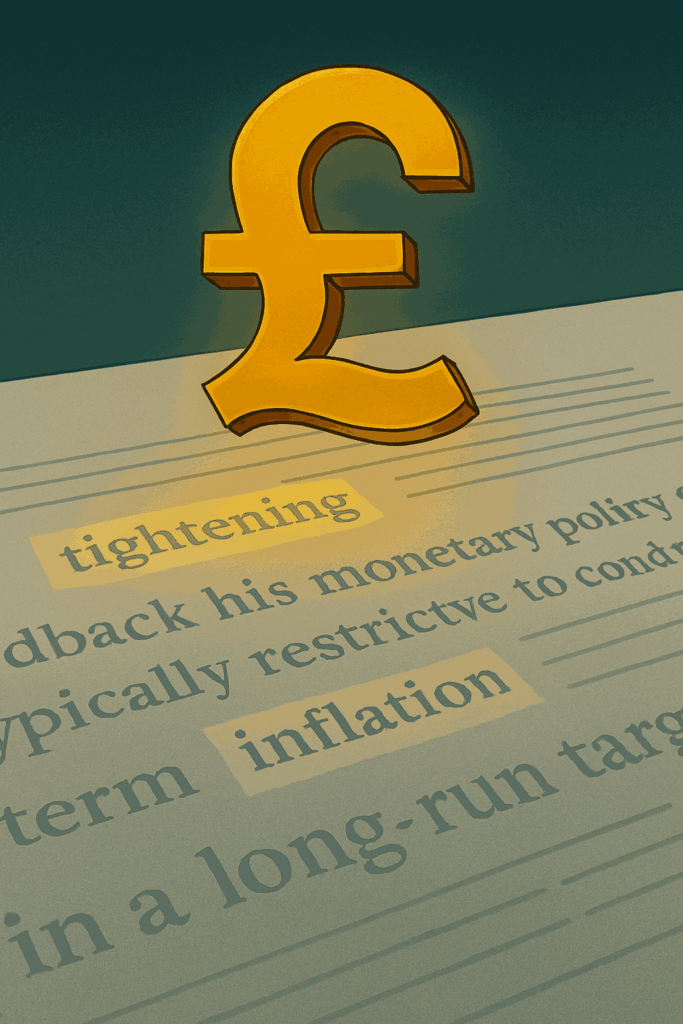
Forward guidance refers to the BoE’s communication about the likely future path of interest rates and monetary policy. It’s essentially the Bank’s way of shaping market expectations.
For example, if the BoE says, “Further tightening may be required if inflation persists,” markets may immediately price in a higher probability of future hikes. Conversely, if the language shifts to something softer like, “Monetary policy will remain restrictive for some time,” traders may see it as a sign that the hiking cycle is at an end.
Even if the base rate remains unchanged at a meeting, these subtle cues can trigger sharp GBP moves.
Why Language Changes Move the Pound
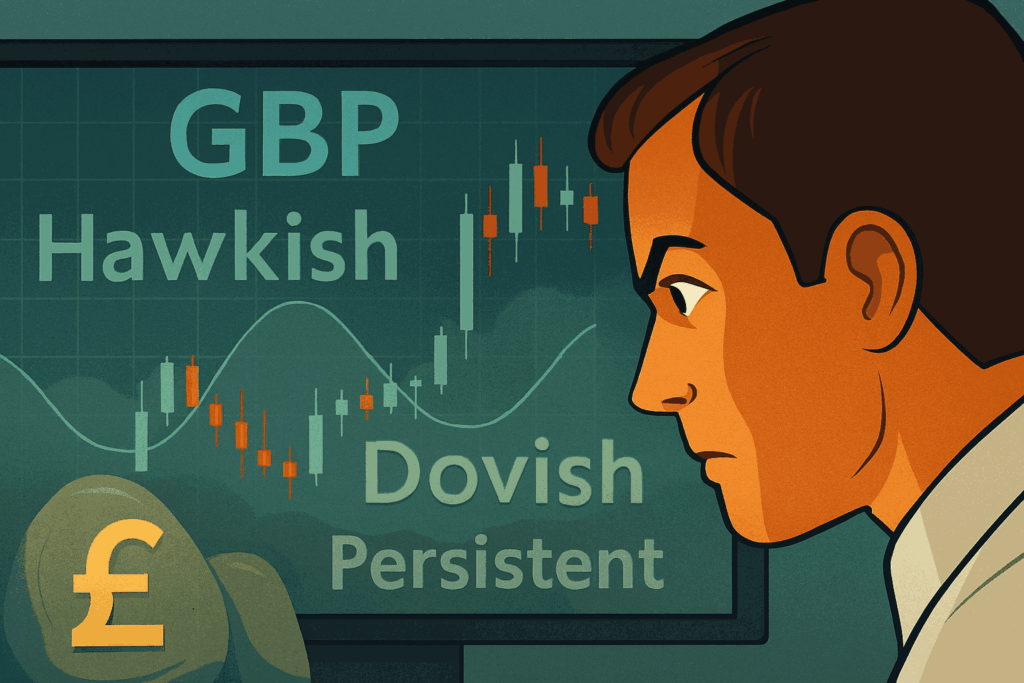
Currency markets thrive on expectations. The actual decision hike, hold, or cut is important, but much of it is often priced in before the announcement. What isn’t priced in is the tone and direction of guidance.
- Hawkish guidance → Signals a tightening bias → GBP often strengthens.
- Dovish guidance → Suggests easing or no further hikes → GBP tends to weaken.
- Neutral or mixed tone → Can create choppy trading as markets digest uncertainty.
For traders, the BoE’s statement is dissected word-for-word. Words like “persistent,” “transitory,” “sustained,” or “temporary” carry enormous weight.
A Case Study: Language Tweaks in Action
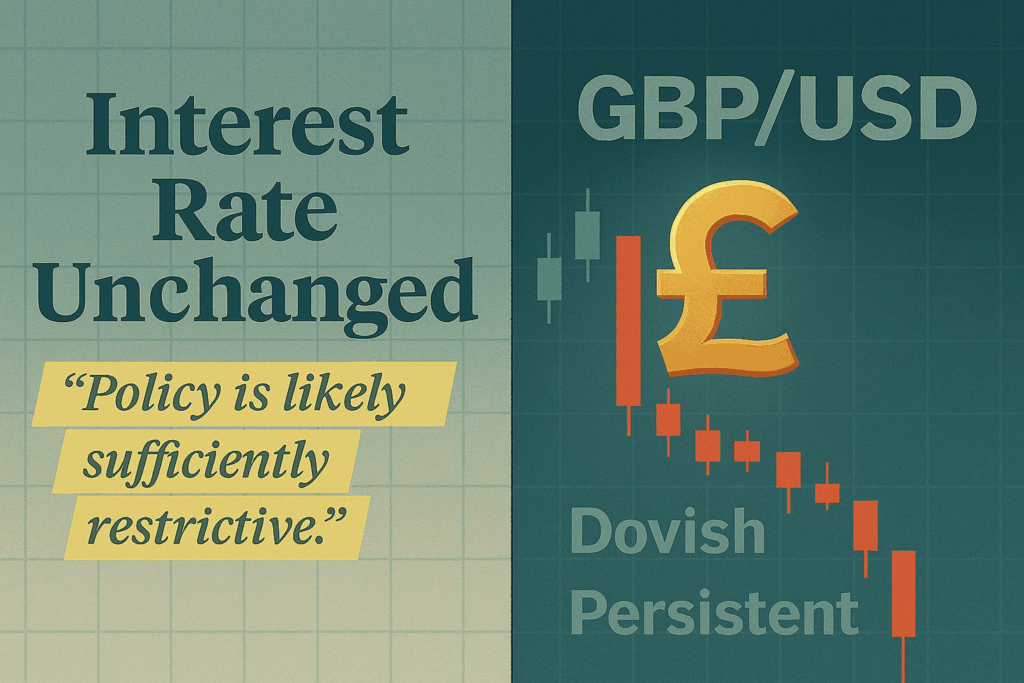
Consider a past scenario where the BoE kept rates steady but changed its forward guidance from “Further increases may be required” to “Policy is likely sufficiently restrictive.”
Despite no change in the rate, GBP/USD fell sharply as traders interpreted this as a clear signal that the hiking cycle was ending. Within minutes, options markets repriced, gilt yields dropped, and sterling weakened across the board.
This illustrates how guidance can matter more than action in determining immediate GBP reaction.
What Traders Should Watch
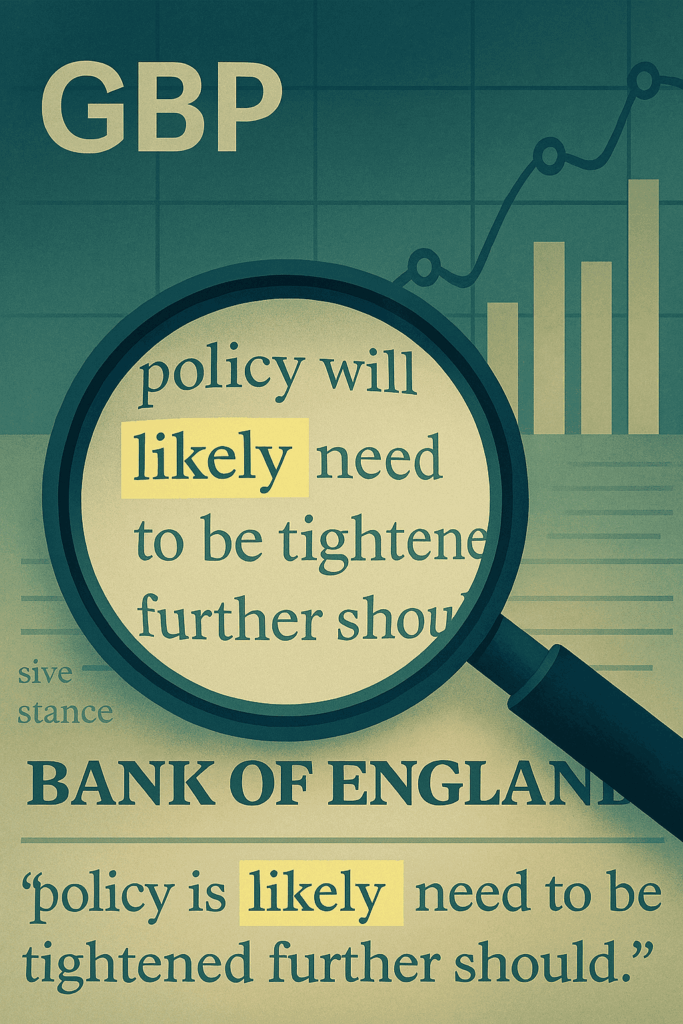
When trading around BoE statements, focus on:
- The vote split – A tighter split suggests internal disagreements, which can hint at policy direction.
- Inflation wording – Is inflation described as persistent or easing?
- Employment and growth references – Signs of economic slowdown may limit rate hikes.
- Comparison to prior guidance – Spotting differences from the last statement is often the fastest way to anticipate market reaction.
Trading Strategies Around Guidance
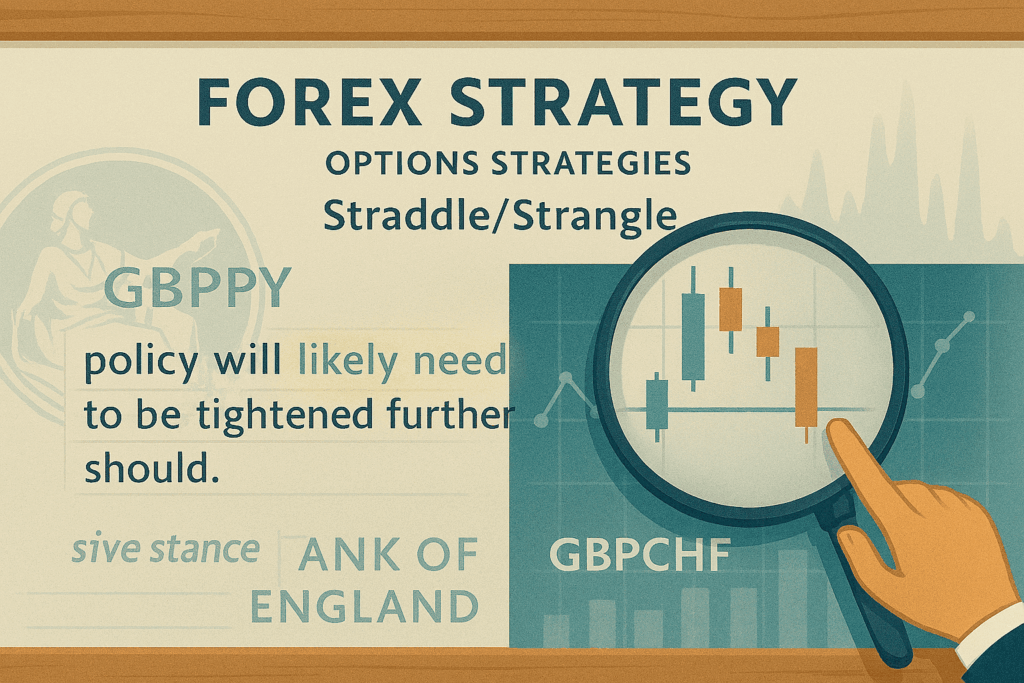
- Fade the initial spike: If guidance is only marginally changed, early moves may be overdone. A retracement often follows.
- Use options: Straddles or strangles can capture volatility when you expect big moves but aren’t sure of the direction.
- Check cross-pairs: GBP/JPY and GBP/CHF often exaggerate BoE-driven moves, especially during risk-on/off environments.
The Bigger Picture
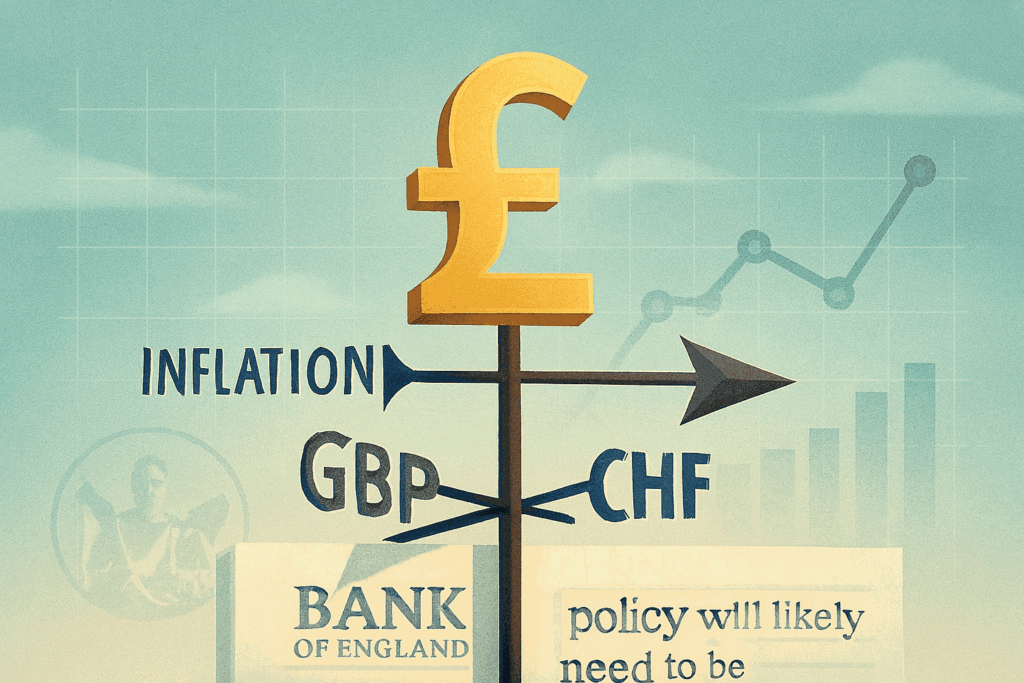
While forward guidance is powerful, traders should remember that it’s not a crystal ball. The BoE adapts its message depending on incoming data especially inflation and labor reports. This means guidance can shift from hawkish to dovish within weeks if the data turns.
While forward guidance is powerful, traders should remember that it’s not a crystal ball. The BoE adapts its message depending on incoming data especially inflation and labor reports. This means guidance can shift from hawkish to dovish within weeks if the data turns.
Conclusion
In forex trading, words are as powerful as numbers. The Bank of England’s forward guidance is a prime example of how language alone can reprice GBP pairs within minutes. By learning to analyze subtle wording changes and comparing them to prior statements, traders can anticipate market moves faster and trade with greater confidence.