The UK economy stands at a crossroads. After years of turbulence Brexit disruptions, pandemic scarring, inflationary shocks, and energy market volatility traders now face the question: what comes next for growth, and how the UK Growth Outlook will shape GBP over the next 12 months?
Sterling is often viewed as a “barometer” of UK macro health. Stronger growth prospects tend to attract capital inflows, pushing GBP higher, while stagnation or recession keeps the currency under pressure. In this piece, we map out three key growth scenarios and their potential GBP impact.
Scenario 1: Resilient Recovery
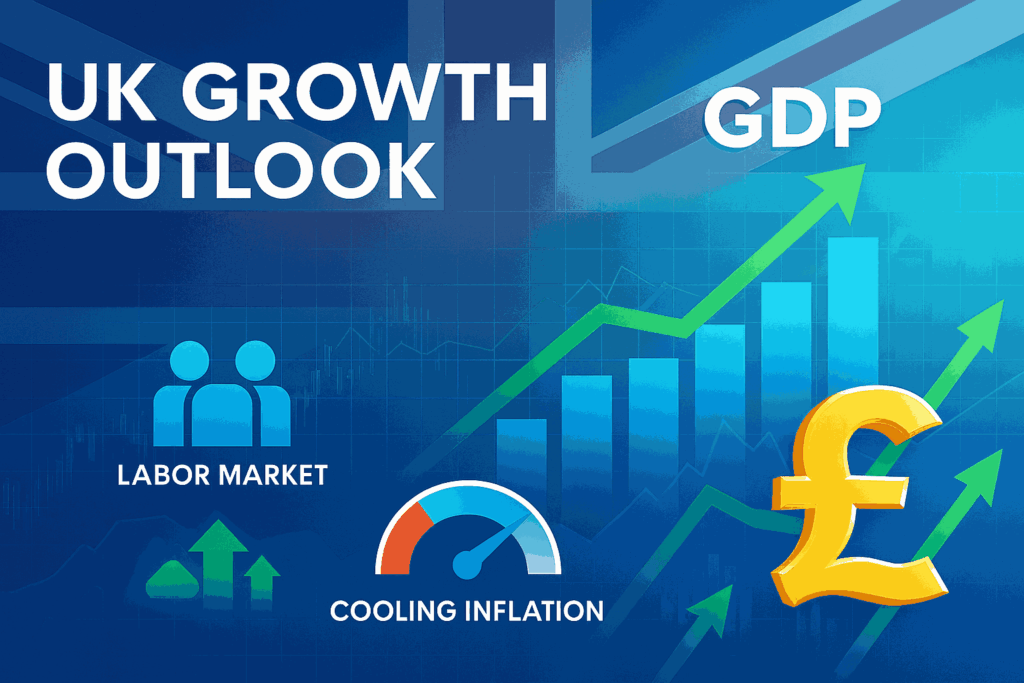
If the UK manages to outpace expectations, growth could stabilize around 1.5–2% annualized fueled by easing inflation, stronger consumer demand, and resilient labor markets. Lower energy costs and improving global trade could also support manufacturing and services.
- BoE Policy Impact: A stronger recovery may give the Bank of England scope to hold rates higher for longer, or even signal cautious hikes if wage growth remains sticky.
- GBP Reaction: GBP/USD could grind higher towards 1.35+, especially if paired with a softer Fed stance. Against the euro, sterling might firm as the ECB deals with its own sluggish growth picture.
- Trading Playbook: In this environment, buying GBP on dips particularly against low-yield currencies like JPY could be a favored strategy.
Scenario 2: Growth Stagnation
A “muddle through” baseline is often cited by economists, where UK growth remains stuck around 0–0.5%, weighed down by weak investment, high borrowing costs, and sluggish productivity. Inflation may continue easing, but not enough to unlock strong consumer spending.
- BoE Policy Impact: With growth flatlining, the BoE may pivot cautiously towards cuts by late 2025 to avoid a deeper downturn. Forward guidance would become the main policy tool, balancing inflation risks with the need for stimulus.
- GBP Reaction: Sterling could remain range-bound, trading choppily between 1.25–1.30 vs USD. EUR/GBP might oscillate near 0.85–0.87, with no strong directional bias.
- Trading Playbook: Expect range-trading strategies to dominate. Short-term traders may find opportunities around key data releases (CPI, jobs reports) that spark temporary volatility.
Scenario 3: Technical Recession
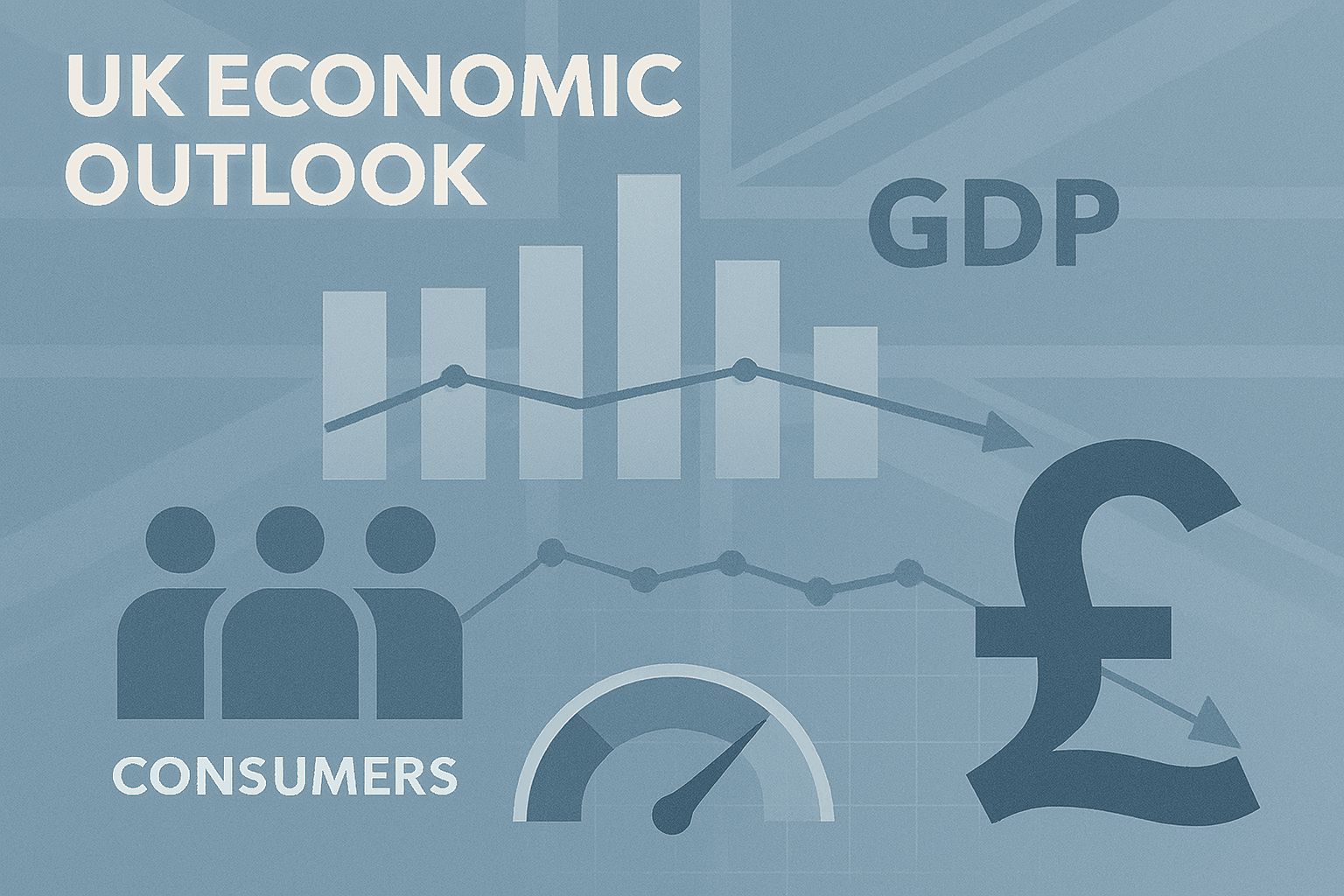
If the UK slips into back-to-back negative quarters driven by tight financial conditions, falling real incomes, or external shocks like geopolitical flare-ups the growth outlook could worsen significantly. A –0.5% to –1% contraction would be enough to reprice sterling lower.
- BoE Policy Impact: In this case, the BoE would likely accelerate rate cuts, potentially even reviving targeted QE measures if credit markets tighten.
- GBP Reaction: GBP would likely underperform across the board, with GBP/USD sliding towards 1.20 and EUR/GBP potentially retesting 0.90+. Capital outflows would weigh further on sentiment.
- Trading Playbook: In recession, safe-haven pairs like GBP/CHF and GBP/JPY could see sharp downside. Positioning for volatility around BoE announcements and UK GDP releases would be key.
External Risks & Wildcards
- US Election 2025: A change in US fiscal or trade policy could shift GBP/USD dynamics beyond domestic growth drivers.
- EU Recovery or Slump: Since the eurozone is the UK’s largest trading partner, relative growth divergence will matter for EUR/GBP.
- Geopolitics: Energy supply shocks or political instability could amplify downside risk for sterling.
Bottom Line
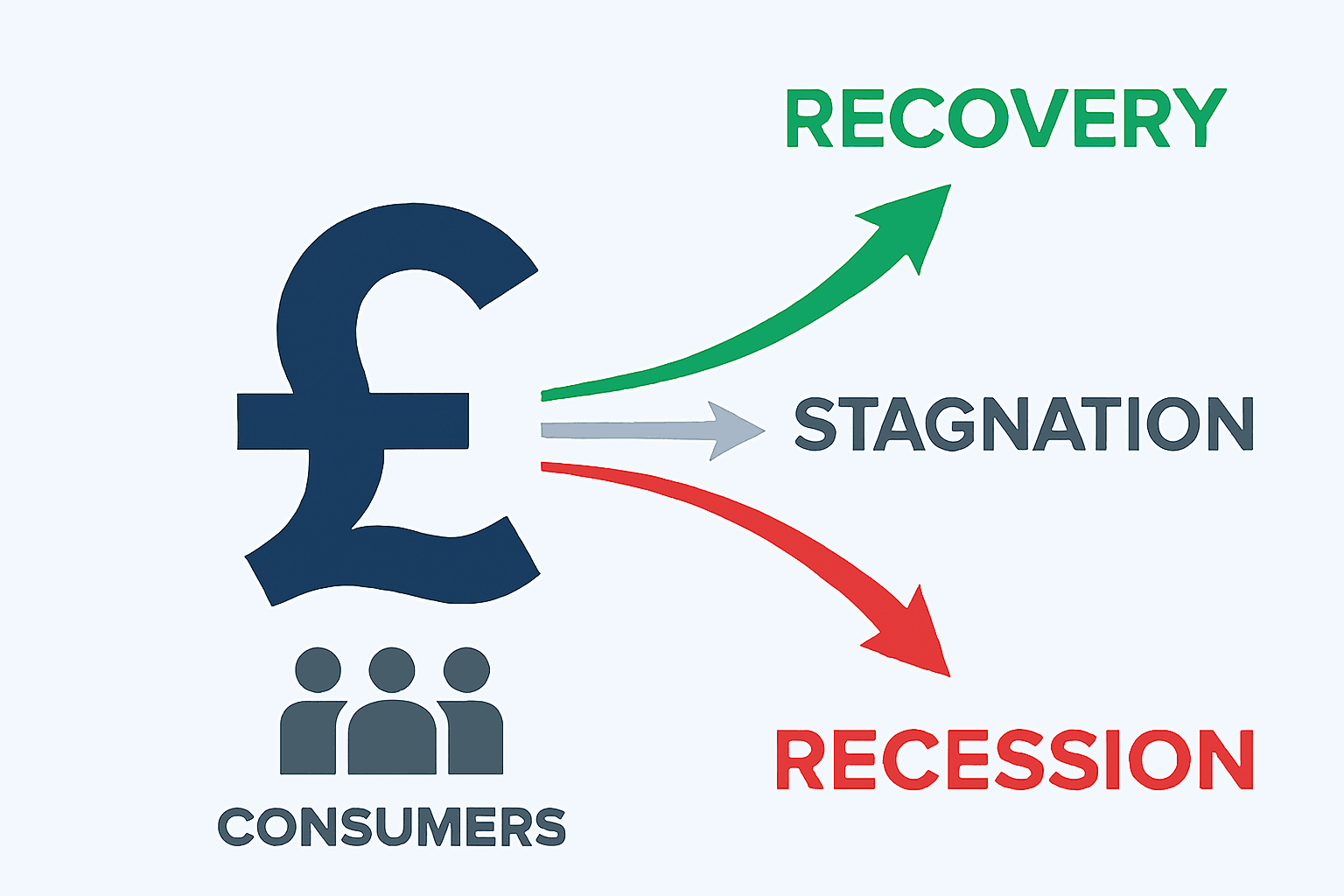
The pound’s path in the next 12 months will depend heavily on whether the UK economy shows resilience, stagnates, or slides into recession. Traders should stay alert to BoE policy pivots, high-frequency data releases, and external shocks.
In practice, GBP is unlikely to follow a straight-line trend short bursts of volatility will create opportunities. Adapting strategies to each scenario will be crucial for navigating the UK’s uncertain growth outlook.