The British Pound (GBP) often reflects global investor sentiment. While sterling is not considered a safe-haven currency, its behaviour against true havens like the Swiss Franc (CHF) and Japanese Yen (JPY) provides critical insight during times of uncertainty. On risk-off days triggered by geopolitical tensions, financial instability, or global market shocks, safe-haven flows dominate. Traders typically rotate out of risk-sensitive currencies and into safe-haven assets. This article breaks down how GBP responds in such situations, specifically against CHF and JPY, and what traders should look out for when navigating risk-driven markets.
Why Safe-Havens Matter in Forex
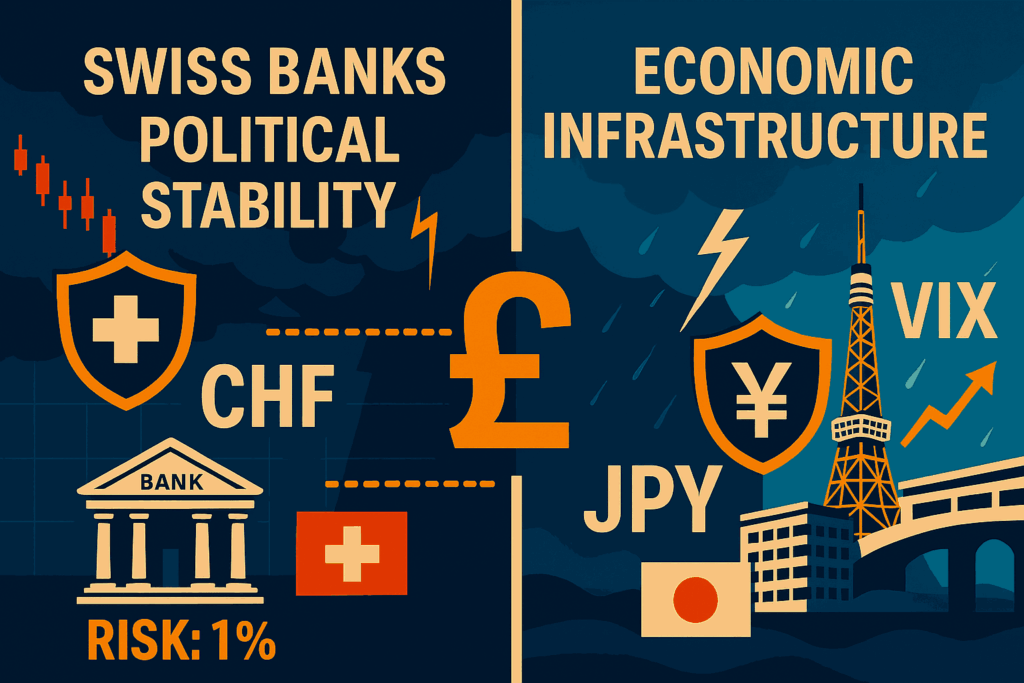
Currencies like CHF and JPY are sought after in turbulent times because of their perceived stability. The Swiss Franc benefits from Switzerland’s long-standing political neutrality and robust banking system, while the Yen is backed by Japan’s strong external balance and deep financial markets.
For traders, comparing GBP/CHF and GBP/JPY offers a clear barometer of risk sentiment. When volatility spikes:
- GBP/CHF tends to fall as the Franc attracts safe-haven inflows.
- GBP/JPY usually drops more sharply since JPY is extremely sensitive to global risk conditions.
These moves allow traders to gauge market stress and position accordingly.
GBP/CHF in Risk-Off Scenarios

The Pound vs the Swiss Franc often trades in a steady range during calm conditions, but in periods of uncertainty, CHF strength becomes apparent. For example:
- During the 2022 Russia-Ukraine escalation, GBP/CHF dropped significantly as investors sought the safety of CHF.
- In times of banking stress, CHF demand typically rises, causing sterling to weaken further against the Franc.
For traders, GBP/CHF acts as a measured indicator of safe-haven flows, showing gradual yet consistent moves.
GBP/JPY: The Volatile Risk Barometer
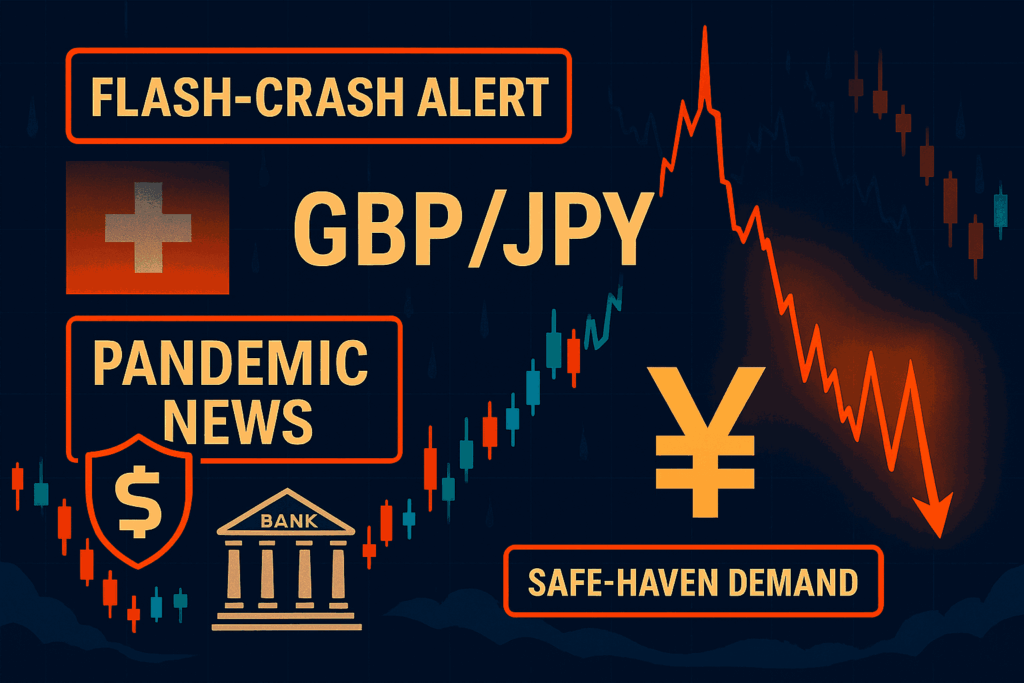
Unlike CHF, the Japanese Yen reacts more aggressively to risk sentiment, making GBP/JPY one of the most volatile major pairs. When global equity markets tumble, or when geopolitical tensions rise, JPY surges.
- For instance, during the COVID-19 outbreak in early 2020, GBP/JPY dropped nearly 15% within weeks as JPY strength accelerated.
- Similarly, during “flash crash” events in global markets, GBP/JPY tends to record sharp intraday declines.
Traders view GBP/JPY as a fast-moving sentiment gauge, often exaggerating market stress compared to GBP/CHF.
What Traders Should Watch
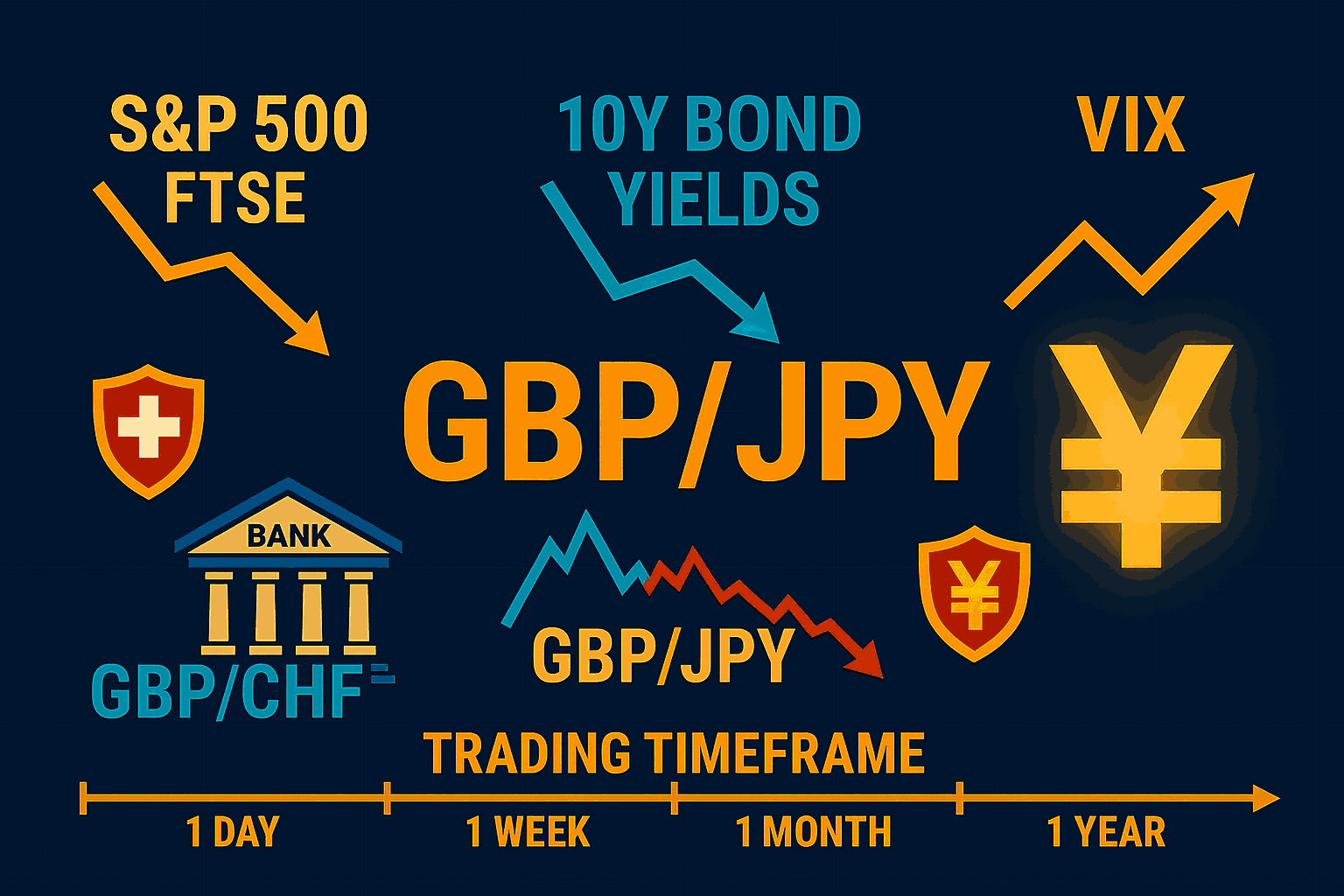
When navigating GBP against safe-havens, a few rules of thumb help:
- Follow global equity indexes (S&P 500, FTSE 100, Nikkei 225): Sharp equity sell-offs often translate into GBP weakness vs JPY and CHF.
- Track bond yields: Falling yields signal risk aversion, favoring JPY and CHF.
- Look at cross-asset volatility (VIX index): Higher volatility typically pushes GBP lower against havens.
- Time horizon matters: GBP/CHF may suit medium-term trend traders, while GBP/JPY offers opportunities for intraday momentum trades.
Strategy Insights
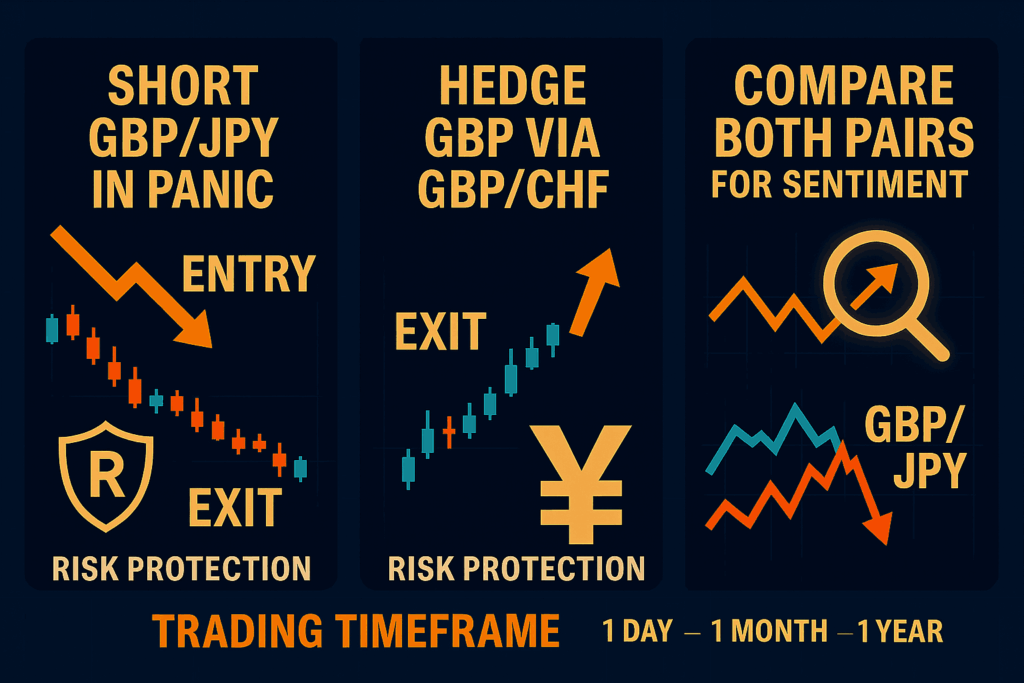
- Short GBP/JPY in risk-off shocks: When panic grips markets, GBP/JPY often provides cleaner downside moves than GBP/CHF.
- Hedge GBP exposure with CHF: Investors holding GBP assets can use GBP/CHF shorts as protection during uncertainty.
- Blend safe-haven comparisons: Watching both pairs together helps traders gauge whether risk sentiment is mild (GBP/CHF drift) or extreme (GBP/JPY collapse).
Conclusion
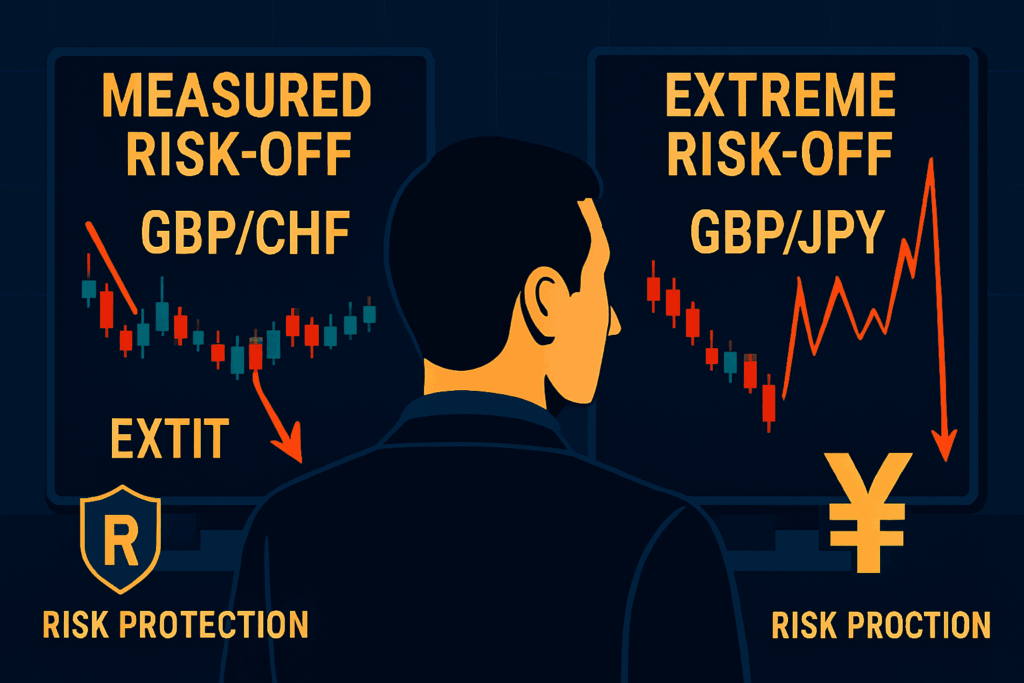
Safe-haven flows define the Pound’s path during periods of global uncertainty. While GBP/CHF reflects measured haven demand, GBP/JPY exaggerates risk-off sentiment, offering faster trading opportunities. For forex traders, understanding this dual behaviour is essential for managing exposure, timing entries, and aligning with broader market dynamics. By watching sterling’s performance against CHF and JPY, traders gain a reliable playbook for navigating turbulent markets.