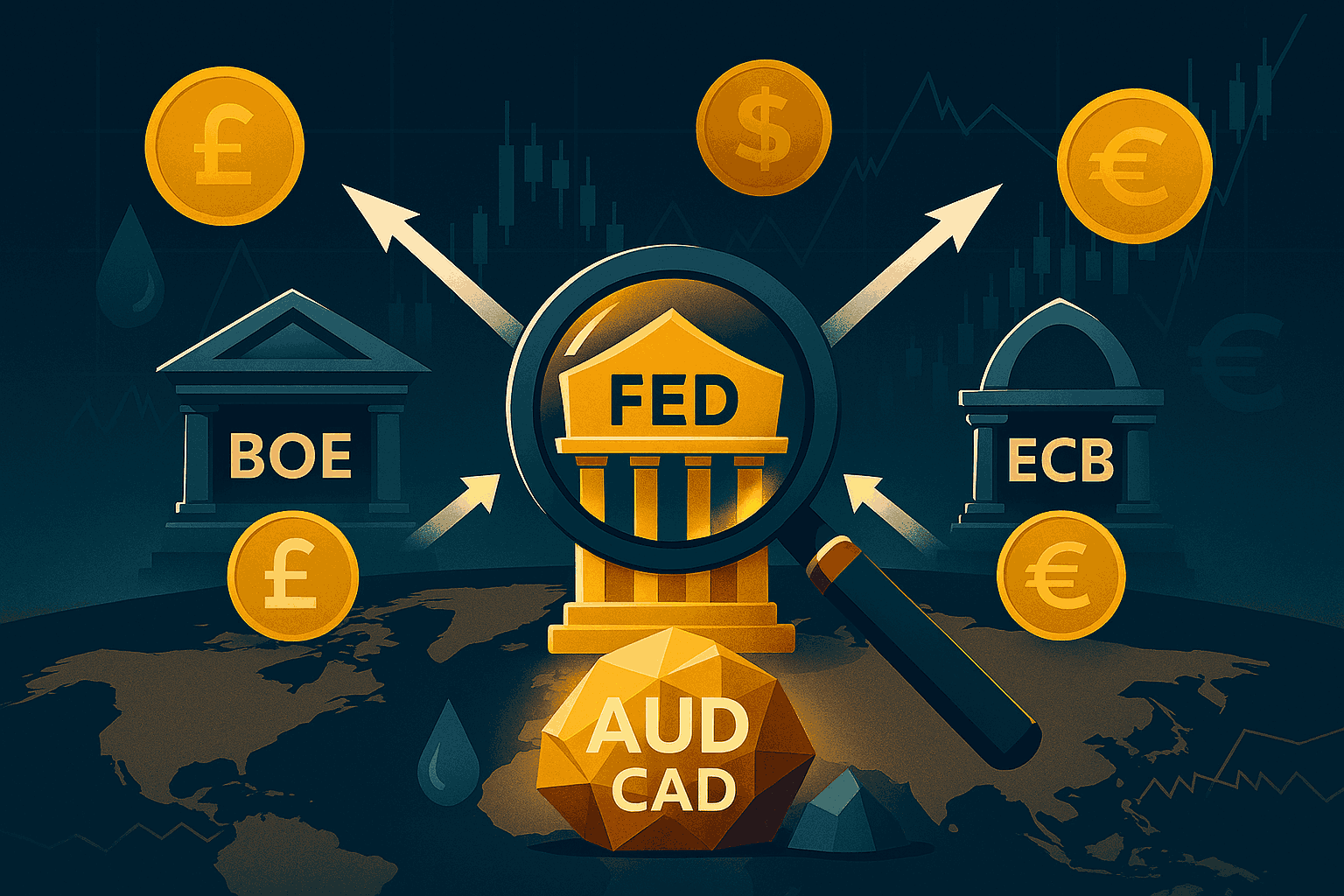
When it comes to trading sterling, the Bank of England (BoE) rarely moves in isolation. GBP’s value is constantly shaped by how its policy stance stacks up against other central banks most importantly the Federal Reserve (Fed) and the European Central Bank (ECB). Divergence when one central bank hikes while another pauses, or when one leans dovish while the other stays hawkish creates some of the most compelling trading opportunities in the FX market.
In this playbook, we break down how cross-central-bank divergence plays out, what to watch for in GBP/USD and GBP/EUR, and how traders can position when the BoE’s path diverges from its global peers.
Understanding Policy Divergence
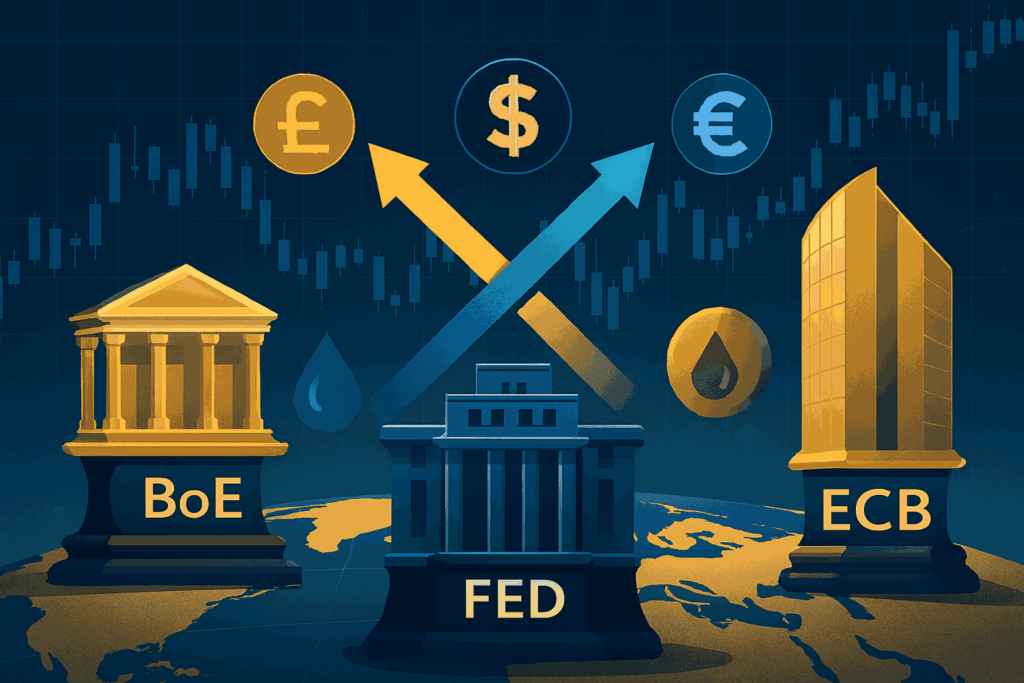
At its core, divergence reflects relative monetary policy expectations. Even if the BoE maintains rates, if the Fed signals cuts while the BoE holds steady, GBP/USD tends to strengthen. Conversely, if the ECB stays hawkish while the BoE turns cautious, GBP/EUR usually drifts lower.
Markets don’t just trade the level of interest rates but the expected path. Forward guidance, inflation projections, and growth outlooks are dissected by traders looking for which bank will tighten or loosen faster. These expectations are instantly priced into bond yields, and FX follows.
GBP/USD: BoE vs Fed Dynamics
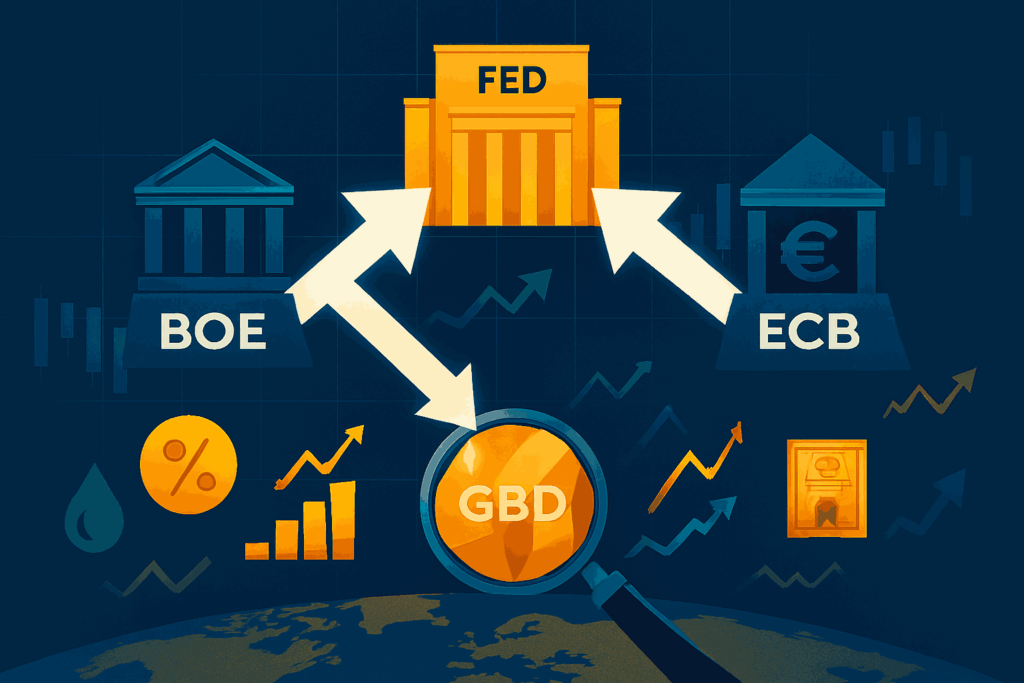
The GBP/USD cross is often driven by which central bank blinks first. If UK inflation proves stickier than US inflation, the BoE may need to hold or hike while the Fed signals easing an environment that supports GBP/USD.
Key catalysts include:
- US Nonfarm Payrolls & CPI → Strong data keeps Fed hawkish, weighing on GBP.
- UK Inflation & Wage Growth → If hot, markets expect the BoE to resist cuts, lifting GBP.
- Fed Communication → A dovish shift in dot plots or Powell’s language can quickly flip GBP/USD higher.
A classic example was 2017–2018, when the Fed aggressively hiked while the BoE lagged. GBP/USD fell sharply as the divergence widened. Conversely, in 2023, markets priced earlier Fed cuts than BoE easing, supporting sterling.
GBP/EUR: Sterling vs the ECB Machine
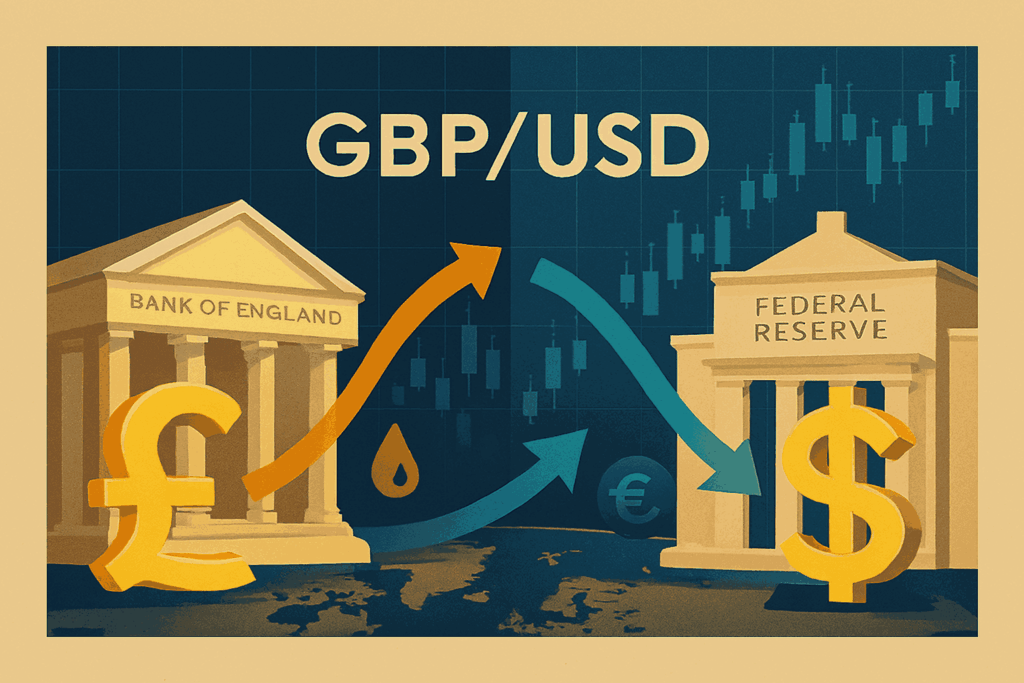
The GBP/EUR pair reflects how the BoE’s policy contrasts with the ECB’s. The euro often trades as a policy anchor, with the ECB slower and more cautious than the BoE.
Scenarios to watch:
- ECB Hawkish, BoE Dovish → GBP/EUR slides, as yield spreads favor the euro.
- ECB Cautious, BoE Steady → Sterling gains, especially if UK data outpaces eurozone data.
- Surprise Divergence → A single unexpected rate cut from either side can trigger 100+ pip moves.
For instance, in mid-2019, Brexit uncertainty held the BoE back, while the ECB was exploring further stimulus. GBP/EUR volatility spiked as traders weighed political risks against monetary divergence.
Trading Cross-Central-Bank Divergence
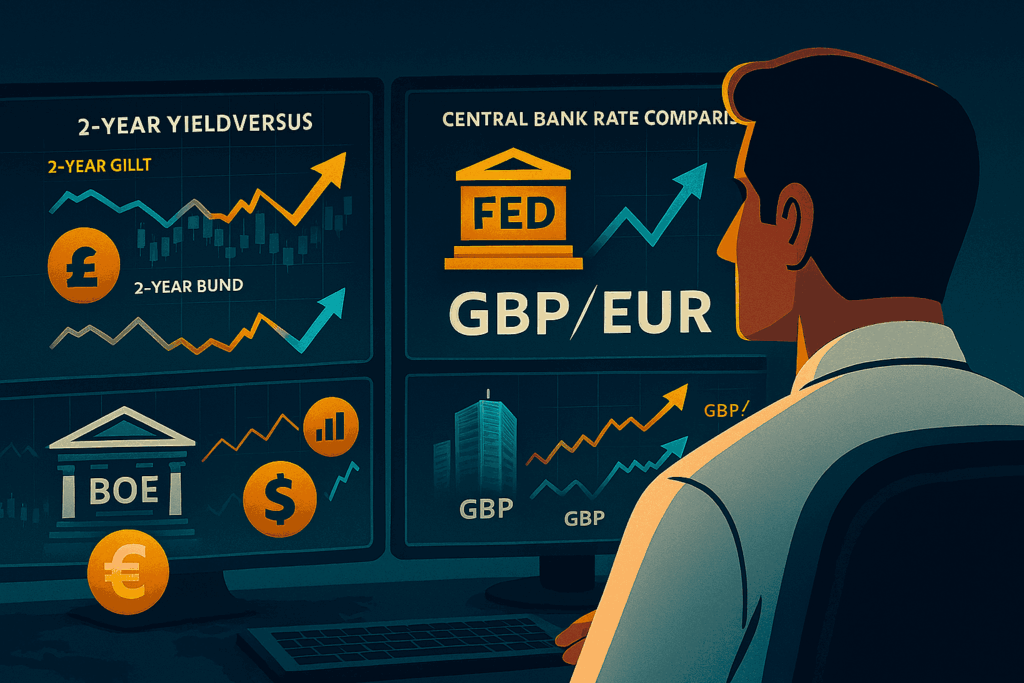
How can traders position for these plays?
- Watch Yield Spreads – The 2-year gilt vs Treasury/Bund spread is a reliable leading indicator for GBP/USD and GBP/EUR.
- Trade Relative Surprises – It’s not just the absolute number, but which bank surprises more dovish or hawkish.
- Focus on Timing – Divergence trades work best around policy inflection points (first hike, first cut).
- Risk Management – Divergence trades can trend strongly, but they also snap back when banks pivot unexpectedly. Stop losses are essential.
Why This Matters for Sterling Traders

Divergence isn’t just an academic concept, it drives multi-month FX trends. For GBP traders, the best opportunities often come when the BoE is caught in a different cycle than its peers. If the Fed or ECB pivots earlier or later, GBP pairs can move hundreds of pips in sustained trends.
For those trading GBP/USD and GBP/EUR, staying ahead of central bank meeting cycles, inflation paths, and market expectations is crucial. The edge lies not only in reading the BoE, but in understanding how it stacks up against Washington and Frankfurt.
Final Word
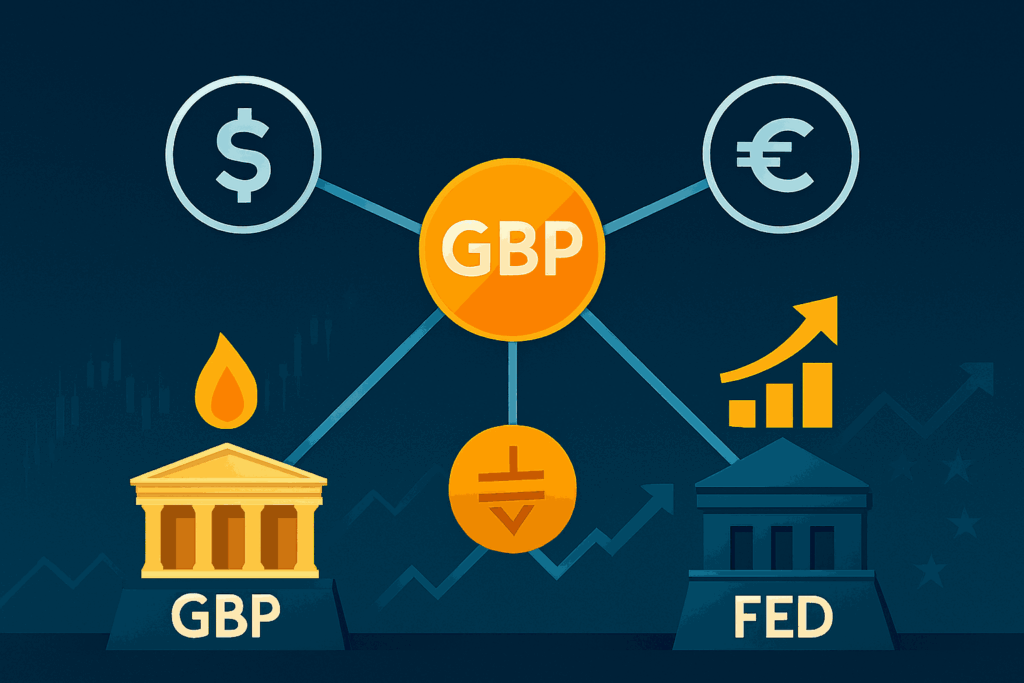
The pound doesn’t live in a vacuum. Whether you’re trading GBP/USD or GBP/EUR, the BoE’s stance only matters in relative terms against the Fed and ECB. Identifying divergence early gives traders the chance to ride powerful moves, especially during transition periods in policy cycles.
As we move deeper into 2025, with inflation paths diverging and growth challenges uneven across economies, cross-central-bank divergence is set to remain one of the most profitable frameworks for trading sterling pairs.