When trading EUR/GBP, one must think beyond simple UK versus EU dynamics. This cross is a reflection of diverging fundamentals especially inflation trends, energy market dynamics, and the European Central Bank’s (ECB) monetary stance. In 2025, these drivers are particularly critical as both economies navigate slow but uneven growth. Let’s break down the roadmap.
Inflation – The Core Driver of Divergence
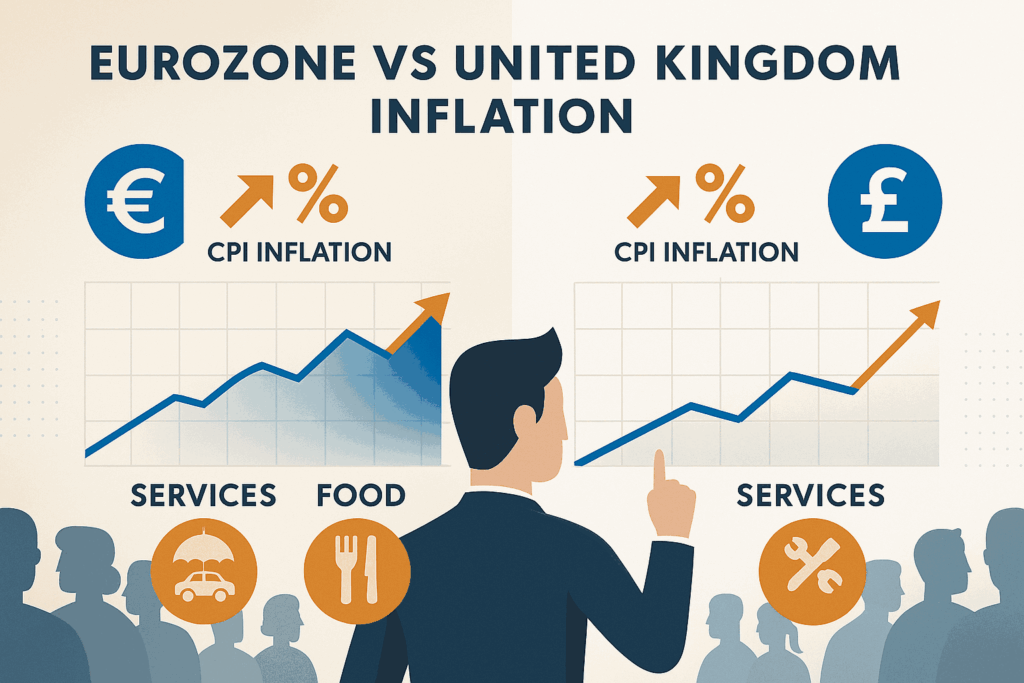
For much of 2024, EU inflation proved sticky, particularly in services and food prices. While headline CPI has eased from double-digit highs seen during the energy crisis, the pace of decline has slowed. Traders watching EUR/GBP should pay close attention to:
- Core inflation readings – If they remain elevated, the ECB may hold rates tighter for longer, supporting the euro.
- UK inflation progress – The UK’s inflation path has been more volatile, with housing and wage pressures still elevated. A divergence where EU inflation falls faster than UK could weaken the euro against sterling.
In short: the inflation spread between the UK and eurozone is a critical sentiment shaper for EUR/GBP positioning.
Energy Dynamics – The Eurozone’s Vulnerability
The energy market remains a structural risk for the eurozone, and it directly influences EUR/GBP. With the UK more energy self-sufficient compared to Germany, Italy, and other EU economies, energy shocks typically hit the euro harder. Key considerations:
- Natural gas dependency – The EU remains exposed to LNG imports, which could be disrupted by geopolitical tensions.
- Oil price spikes – Higher oil can weigh on both currencies, but EU reliance on imports amplifies the impact.
- Green transition policies – While necessary long-term, they can increase near-term costs and weigh on growth.
For traders, winter months are especially risky. A cold snap or supply disruption could push EUR/GBP lower as the euro weakens relative to sterling.
ECB Trajectory – Policy vs Growth Trade-Off
The European Central Bank faces a delicate balancing act in 2025:
- Too dovish and inflation risks linger.
- Too hawkish and fragile growth, particularly in Germany and Italy, could slide into recession.
The ECB’s current path suggests gradual rate cuts in H2 2025, but markets are wary of how quickly easing unfolds. If the ECB cuts earlier or deeper than the Bank of England, the euro may underperform, lifting GBP in the cross.
On the flip side, if UK growth disappoints and the BoE turns dovish faster than Frankfurt, EUR/GBP could break higher.
Technical Outlook – Range or Break?
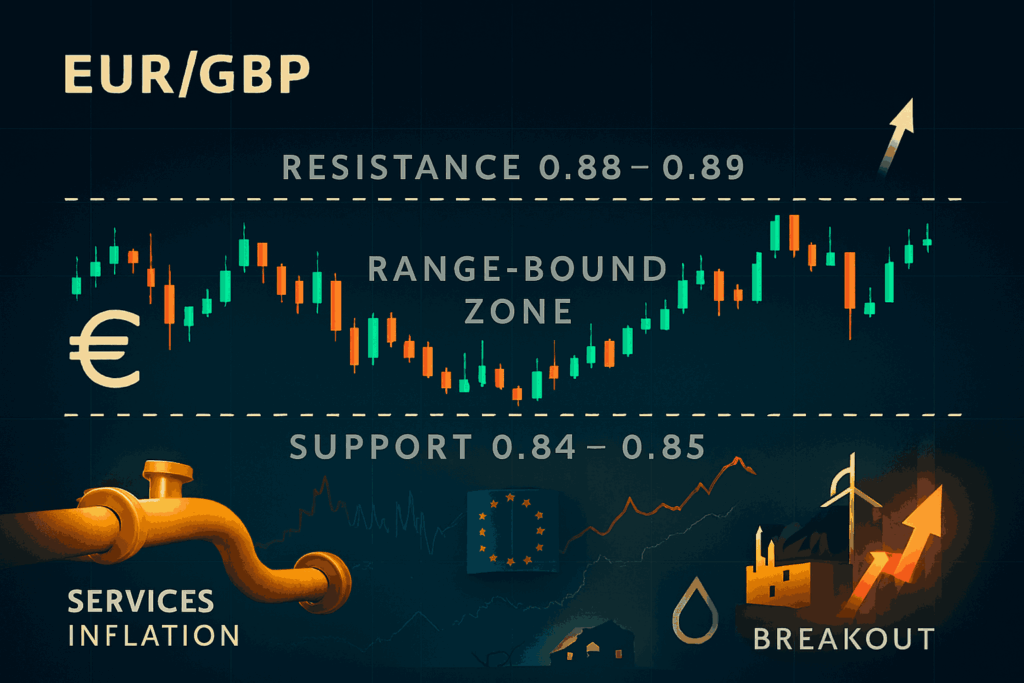
EUR/GBP has often been a range-bound pair, but macro divergence can trigger sharp directional breaks. Traders should monitor:
- 0.84–0.85 support zone – A key floor for euro weakness.
- 0.88–0.89 resistance – Capped rallies in recent years.
- Momentum shifts after ECB/BoE meetings – Signal-driven trades often emerge around central bank policy weeks.
The Road Ahead – Scenario Planning
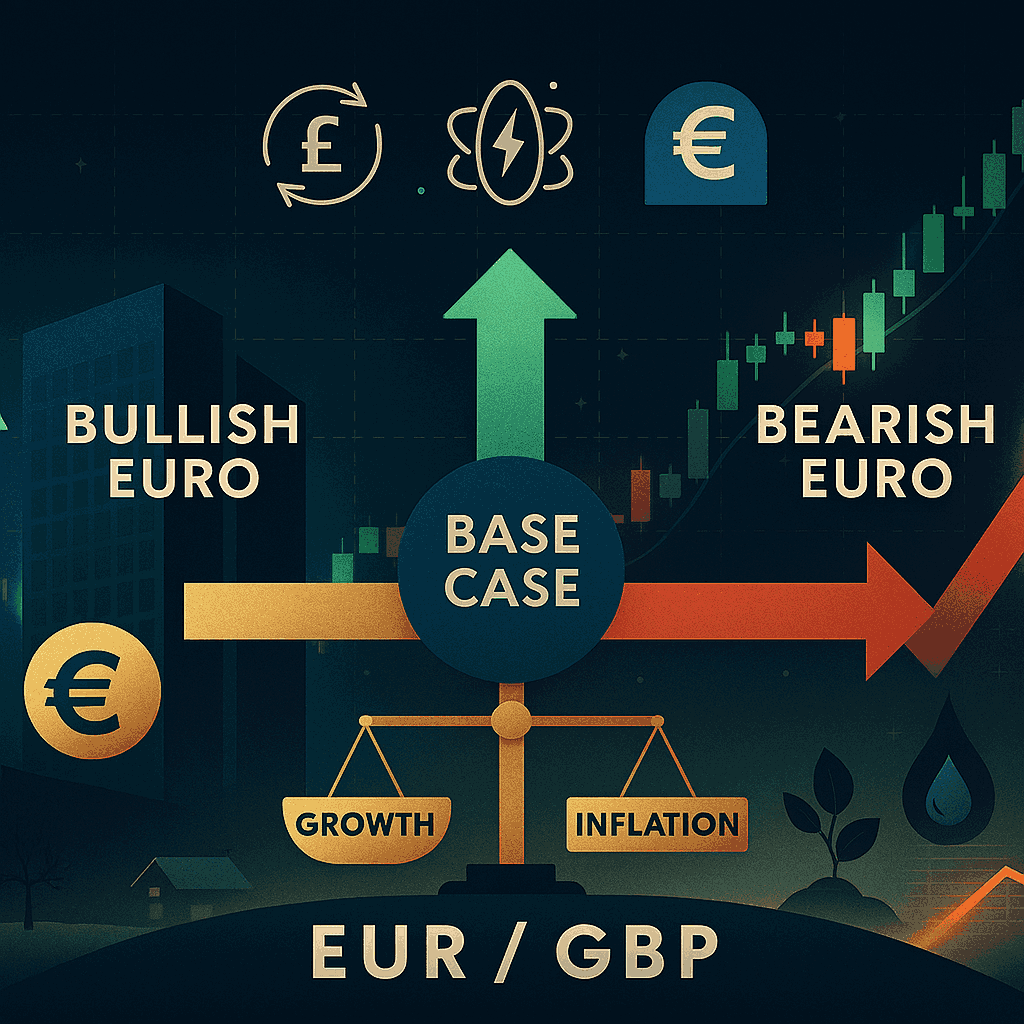
- Base Case (Range Trading): Inflation converges, energy stable, ECB and BoE both easing slowly → EUR/GBP oscillates in a familiar 0.85–0.88 band.
- Bullish EUR Scenario: ECB holds firmer than BoE, energy markets calm → EUR/GBP tests 0.89+.
- Bearish EUR Scenario: Energy shocks resurface or ECB cuts faster than BoE → EUR/GBP slides to 0.84 or lower.
Final Takeaway
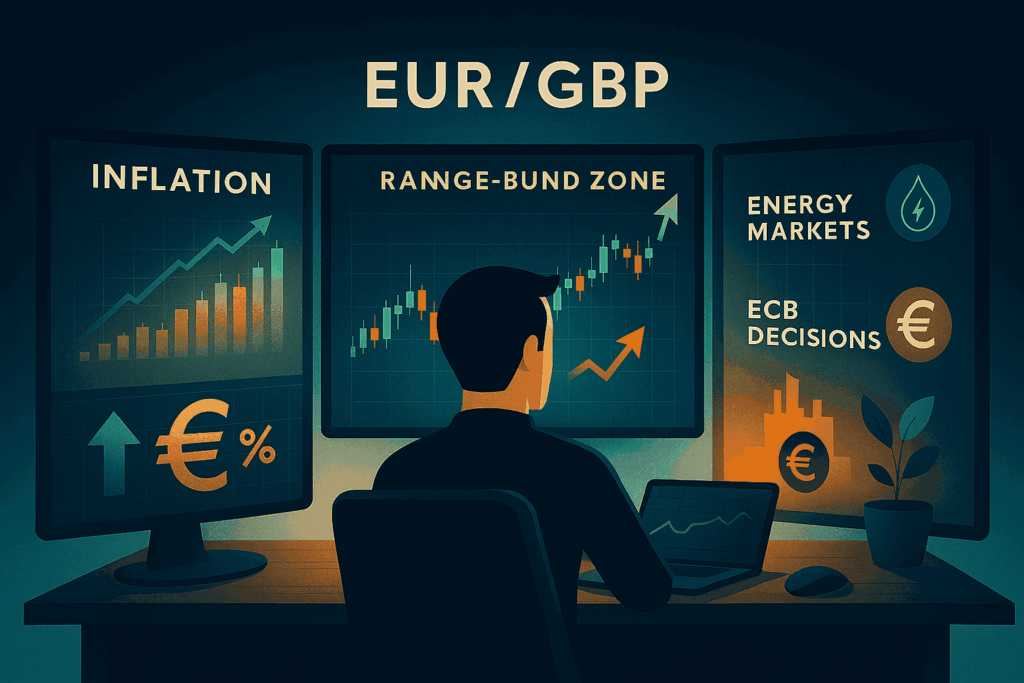
The EUR/GBP roadmap in 2025 is shaped less by day-to-day volatility and more by three powerful themes: inflation spreads, energy shocks, and ECB policy direction. Traders must integrate macro data with market sentiment to capture the next big move.
For most, the trade remains one of patience: wait for divergence, then act decisively.