Introduction
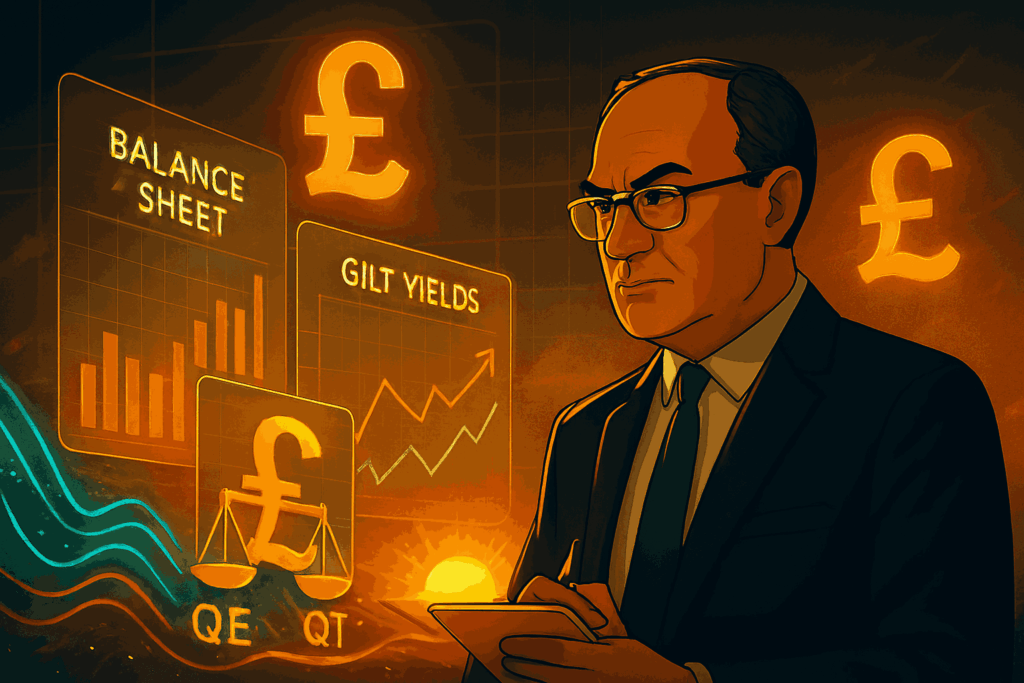
When traders think about the Bank of England (BoE), interest rates often dominate the conversation. But beyond rate decisions, the central bank’s balance sheet policies Quantitative Easing (QE) and Quantitative Tightening (QT) can quietly, yet powerfully, shift the trajectory of the pound. Understanding how these liquidity maneuvers ripple through gilt markets, risk sentiment, and sterling valuations is crucial for anyone navigating GBP pairs.
This article breaks down what QE and QT mean in practice, why they matter for currency markets, and how they continue to shape the pound’s path in 2025.
What is QE and QT in Plain Terms?
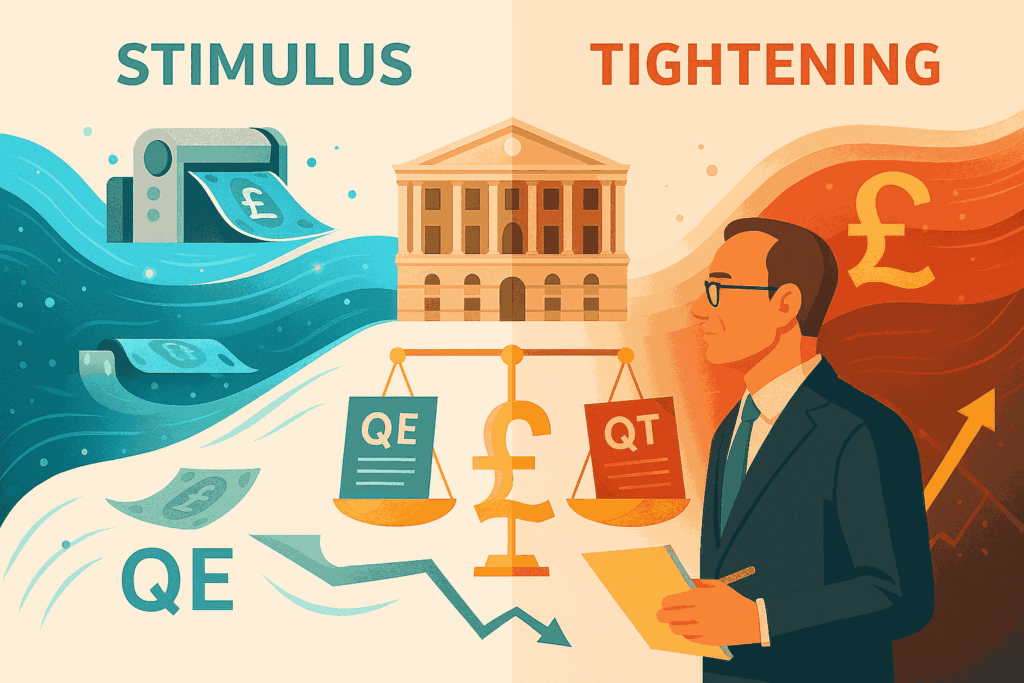
- Quantitative Easing (QE): The BoE buys UK government bonds (gilts), injecting liquidity into the system. Lower gilt yields make borrowing cheaper, encourage investment, and often weaken GBP due to excess liquidity.
- Quantitative Tightening (QT): The opposite process. The BoE reduces its balance sheet by selling gilts or letting them mature, draining liquidity. This can tighten financial conditions and support a stronger pound though it can also spook equity and credit markets.
Think of QE as pressing the “stimulus gas pedal” and QT as tapping the “monetary brakes.”
Why Balance Sheet Policy Moves GBP
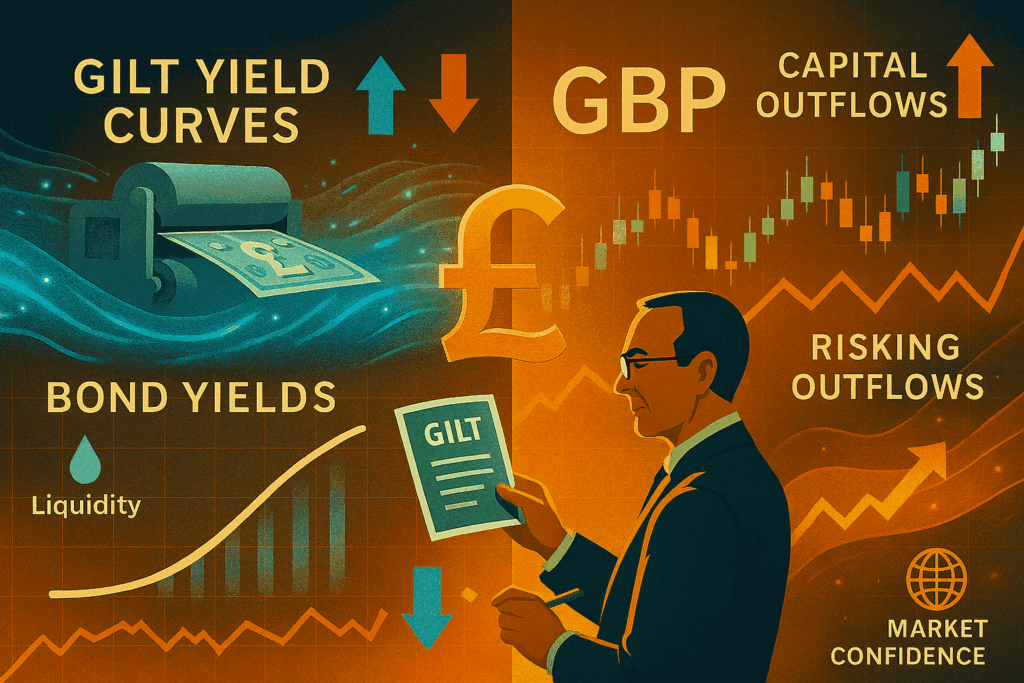
Unlike short-term interest rates, QE and QT directly impact:
- Bond Yields – QE pushes gilt yields lower, reducing foreign investor returns and dampening GBP demand. QT tends to push yields higher, attracting capital inflows and supporting sterling.
- Liquidity Conditions – QE floods the market with liquidity, often boosting risk assets and reducing demand for GBP as a safe haven. QT tightens liquidity, making GBP more sensitive to global risk-off flows.
- Market Confidence – The signaling effect matters. Aggressive QE can hint at economic weakness, pressuring GBP. QT suggests the BoE is confident enough to normalize, which may initially strengthen sterling.
QE in Action: The Pandemic Years
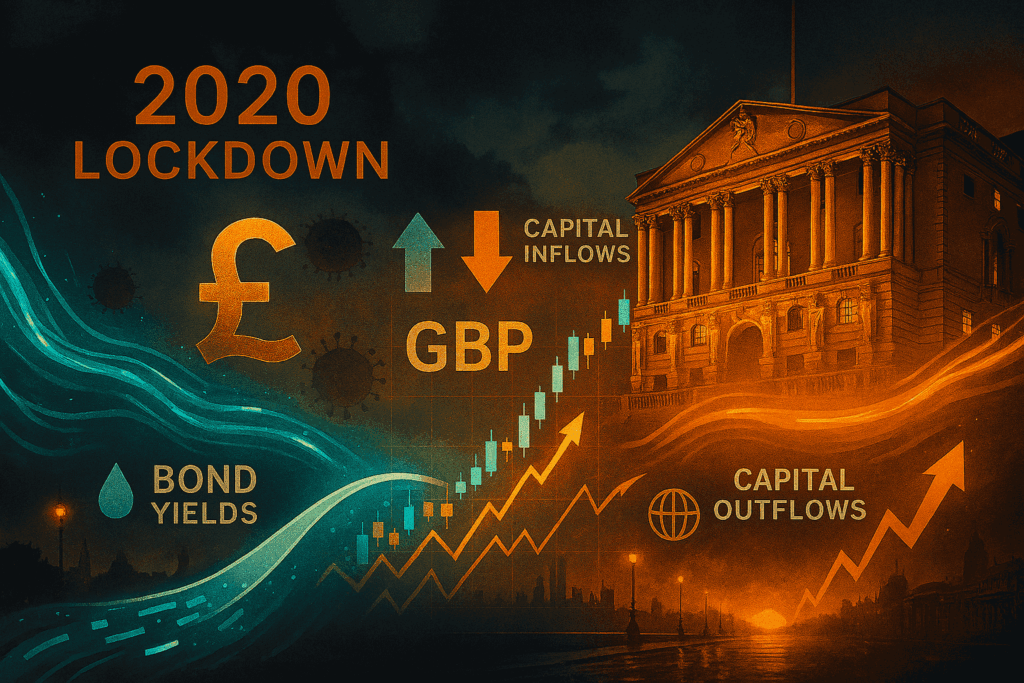
During 2020, the BoE expanded its balance sheet aggressively, buying hundreds of billions in gilts. This shielded the economy but weakened GBP initially as markets priced in prolonged easy money. Once growth picked up, sterling rallied back, helped by vaccine optimism and BoE tapering talk.
This case shows QE’s dual impact: short-term pound weakness through liquidity injection, followed by medium-term recovery once the market perceives policy normalization ahead.
QT in 2025: The New Driver
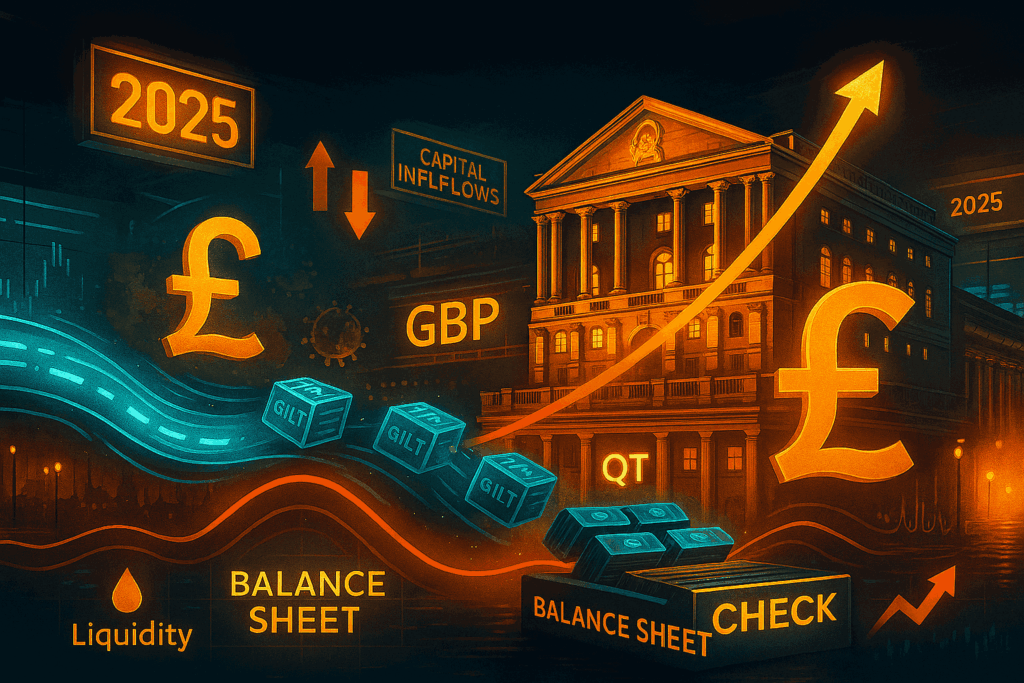
Fast forward to today. The BoE continues its QT program, allowing gilts to roll off while occasionally selling assets outright. For traders, this means:
- Higher Gilt Yields – Making UK debt more attractive to foreign investors, supporting GBP inflows.
- Tighter Conditions – Risk assets may wobble, but GBP benefits if the UK is seen as a safe, yield-rich market.
- BoE Credibility Test – Too much QT could stress financial stability (as seen in the 2022 gilt crisis). Traders watch carefully for signs the BoE will pause or reverse QT under market strain.
What to Watch as a Trader

- BoE Minutes & Speeches – Any mention of QT pace changes is a direct GBP driver.
- Gilt Yield Spreads – Compare UK vs US or German bond yields. Wider UK spreads often mean stronger GBP.
- Liquidity Stress Indicators – If money markets seize up, expectations of QT slowing can pressure GBP.
- Global Backdrop – QT may strengthen GBP, but if global risk aversion spikes, safe-haven flows into USD or JPY can cap gains.
Conclusion
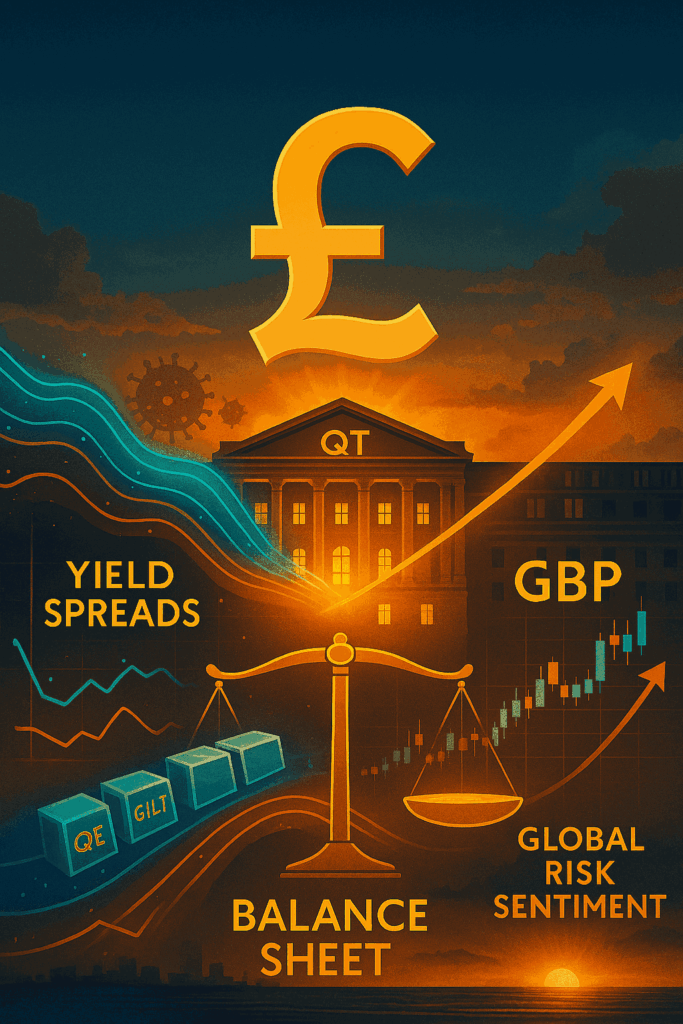
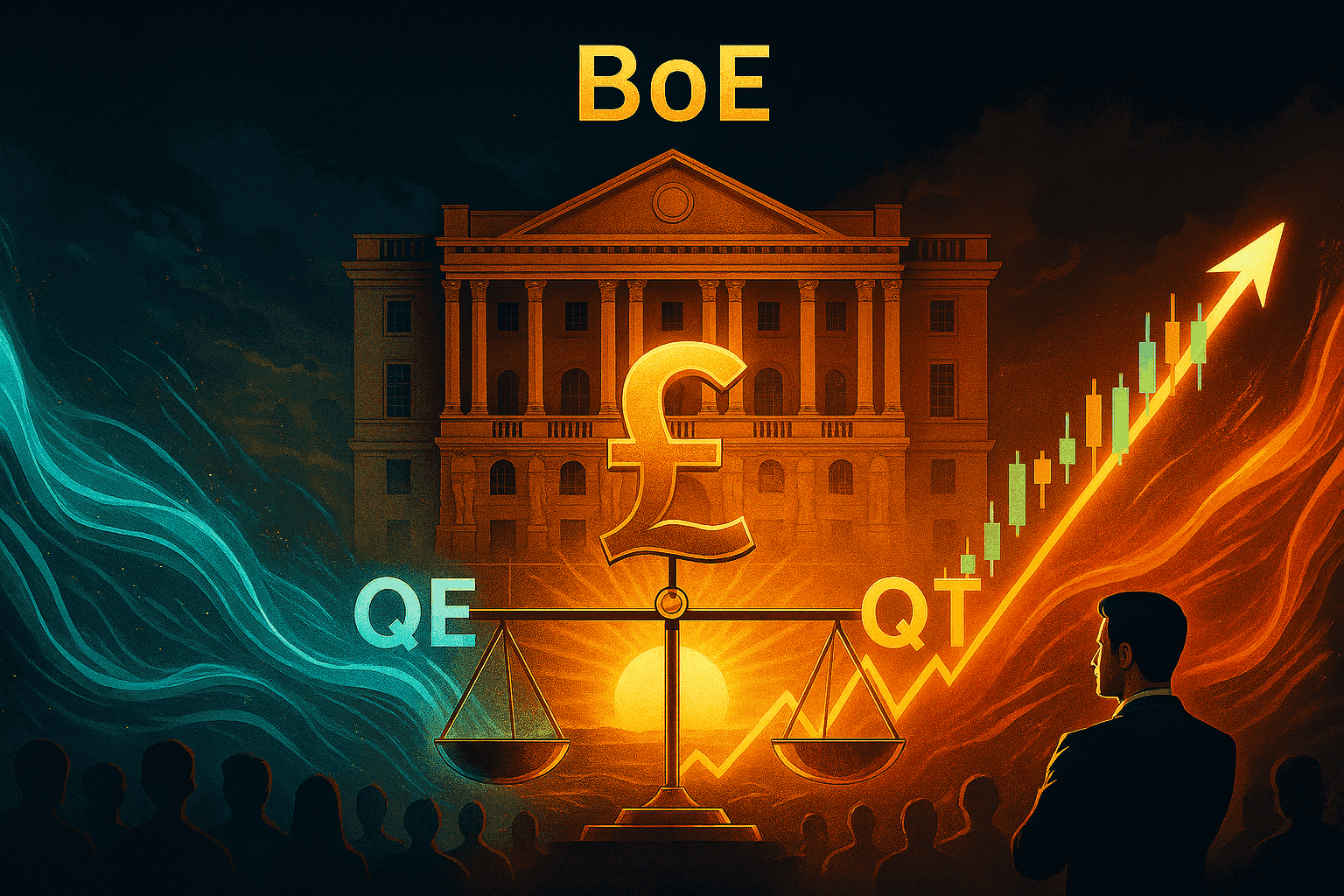
QE and QT may not grab headlines like interest rates, but they are key gears in the BoE’s monetary machine and potent movers of sterling. QE tends to weaken the pound by flooding markets with liquidity, while QT can strengthen it by tightening conditions and boosting yields.
For GBP traders, monitoring balance sheet policy is no longer optional , it’s essential. The BoE’s path of QT in 2025 could well define sterling’s performance across pairs, making it a crucial piece of the daily trading playbook.